

Energy & Renewables · Documented in our brochure
Fasteners for Solar Energy Panel Mounting Structures and Racking Systems
Solar installations demand fasteners that resist corrosion, maintain clamping load across decades of thermal cycling, and meet the dimensional standards specified by racking and module manufacturers. Accurate Fastners, based in Ahmedabad, Gujarat, supplies stainless steel fasteners for panel mounting structures, rooftop systems, ground-mounted arrays, and solar tracking systems as documented in our product brochure. Our range conforms to IS, BS, and DIN dimensional standards, giving procurement teams and project engineers a reliable, specification-aligned source.
Discuss your requirementFrom our brochure – fasteners used in
- Solar panel mounting structures
- Rooftop solar installations
- Ground-mounted solar projects
- Solar tracking systems
Industry Overview
Fastening in solar energy applications
Solar mounting structures are long-life, outdoor assets exposed to wind loading, UV, rain, humidity, and in coastal or industrial locations, elevated chloride and pollutant levels. Every bolted joint in a racking system must retain its preload for the design life of the plant—typically 25 years or more—without loosening, seizing, or corroding to the point of structural compromise. Selecting the correct fastener grade and form is therefore as consequential as selecting the correct section steel or aluminium extrusion.
Accurate Fastners offers hex bolts, carriage bolts, flange bolts, threaded rods, anchor bolts, wedge anchors, nuts, and washers in SS 304 and SS 316 grades, with SS 202 available for certain products in less aggressive environments. Galvanised options are also noted in the brochure for solar applications. The range spans the metric sizes most commonly encountered in utility, commercial rooftop, and residential solar projects, from M6 through M24 on threaded rod and from M5 upward on structural bolt series.
Because solar fasteners are installed at height or in ground arrays that may be difficult to access for maintenance, correct initial specification is critical. Accuracy in grade selection, thread form, and washer arrangement prevents galvanic couples at aluminium rail interfaces and resists the loosening that can result from repeated thermal expansion and contraction. Accurate Fastners encourages engineers to review environmental exposure and dissimilar-metal interfaces before finalising grade selection.
Applications
Common fastening applications
Rooftop Solar Panel Mounting
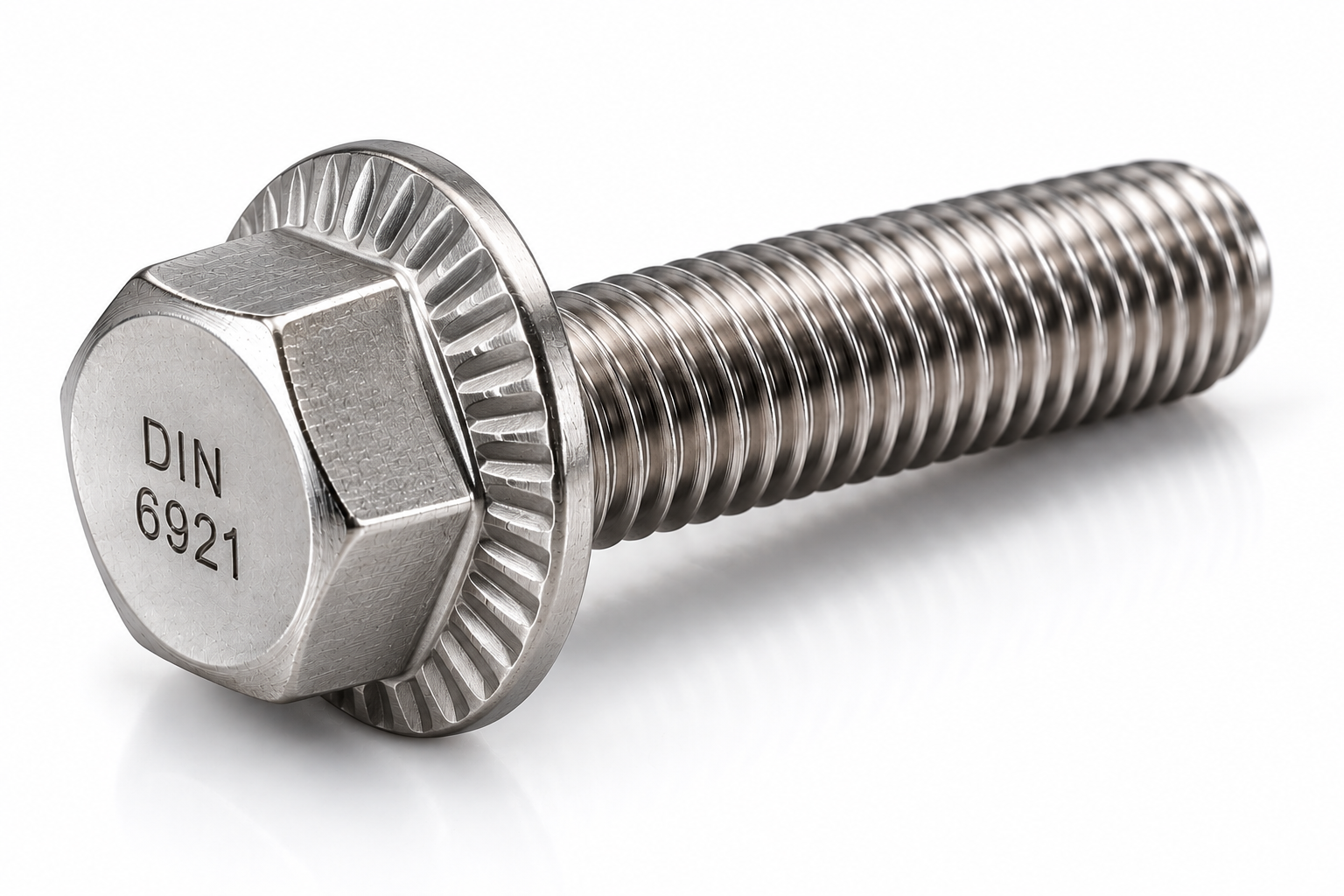
Hex bolts and flange bolts secure aluminium or galvanised steel rails to roof structures. Nylock nuts or spring washers are commonly used to prevent vibration loosening. SS 304 is widely used in urban rooftop environments; SS 316 may be warranted near coastal locations or in areas with high airborne pollution.
Ground-Mounted Array Structures
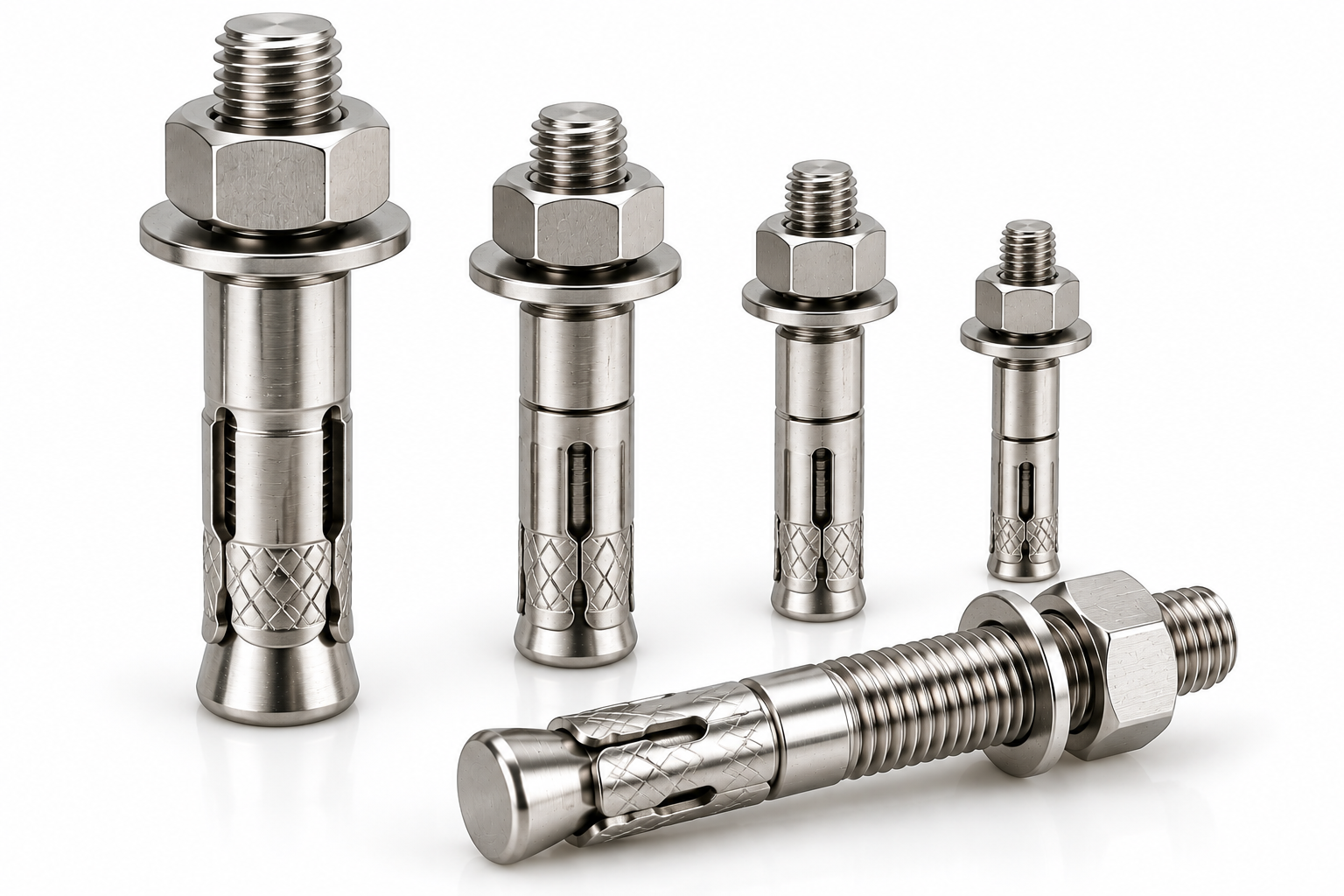
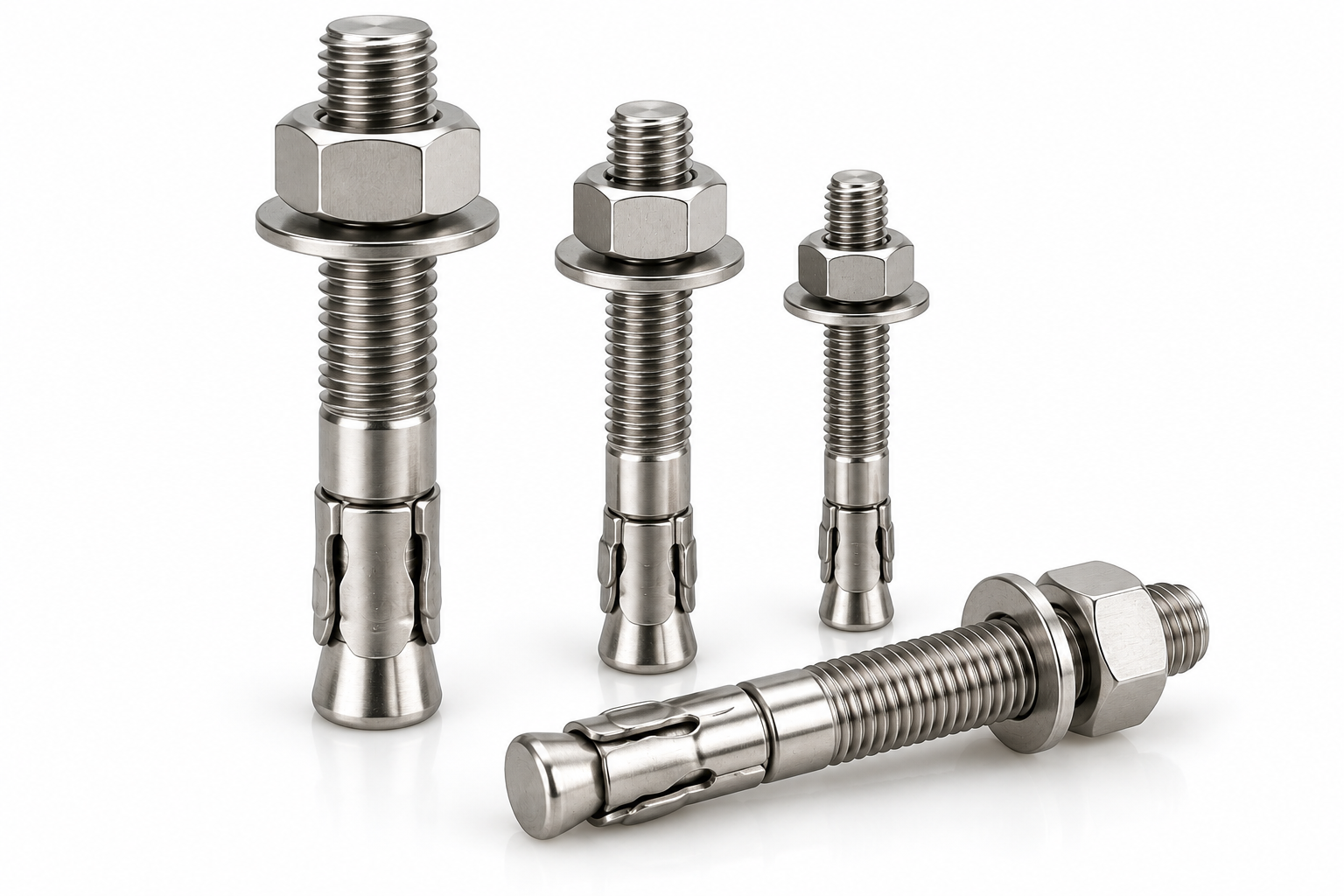
Ground-mounted systems use larger structural bolt assemblies, anchor bolts, and threaded rods to connect driven piles or concrete foundations to the racking frame. Soil-moisture and seasonal waterlogging around foundations increase the case for higher corrosion-resistant grades in the buried or splash-zone portions of the structure.
Solar Tracking System Pivot and Drive Assemblies
Single-axis and dual-axis trackers introduce mechanical movement and cyclic loading at pivot joints. Bolted connections on tracker drives and bearing housings require consistent clamping force; prevailing-torque nuts and appropriate lubrication help manage galling risk in stainless fastener pairs under dynamic service.
Module Clamp and Mid-Clamp Fixing
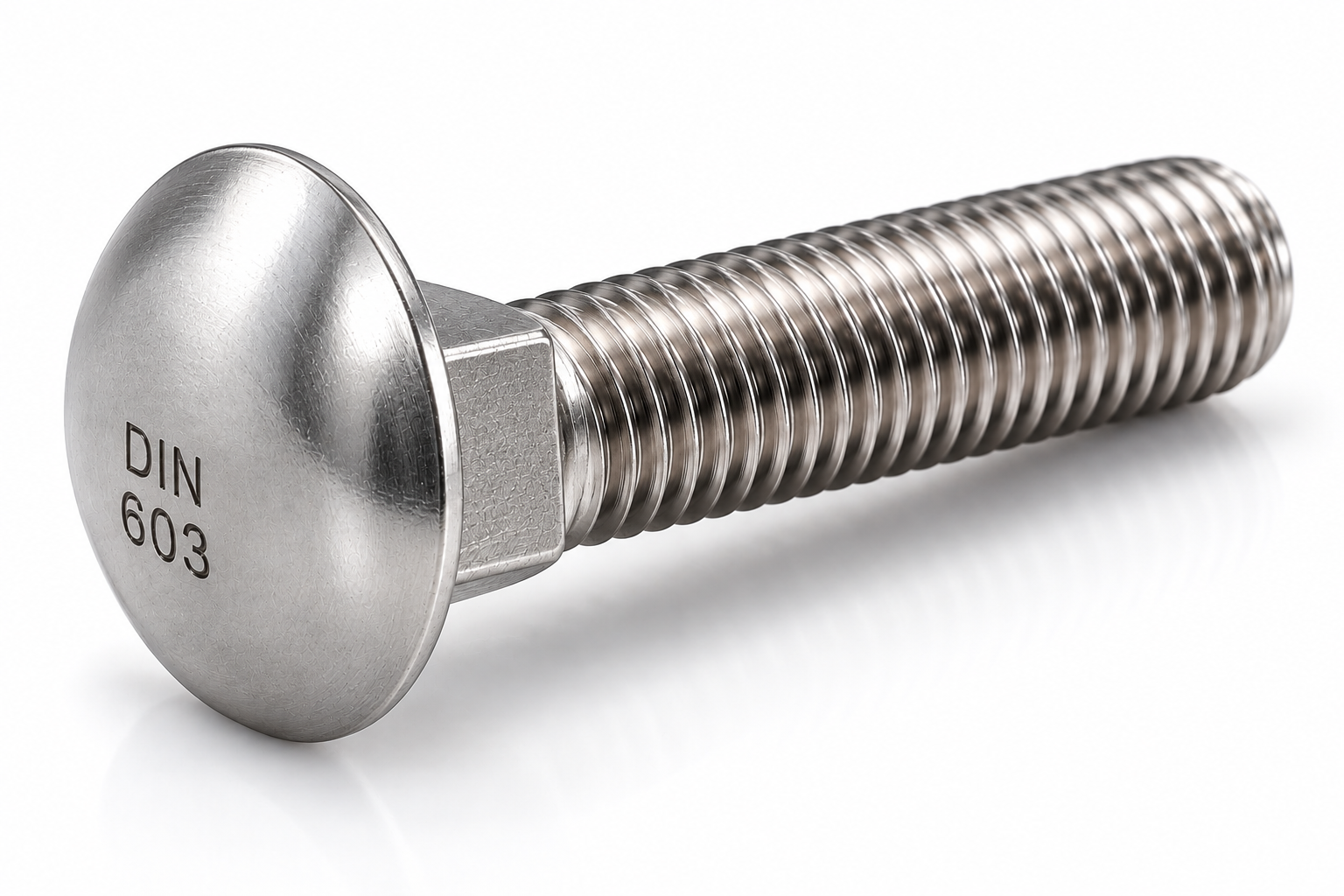
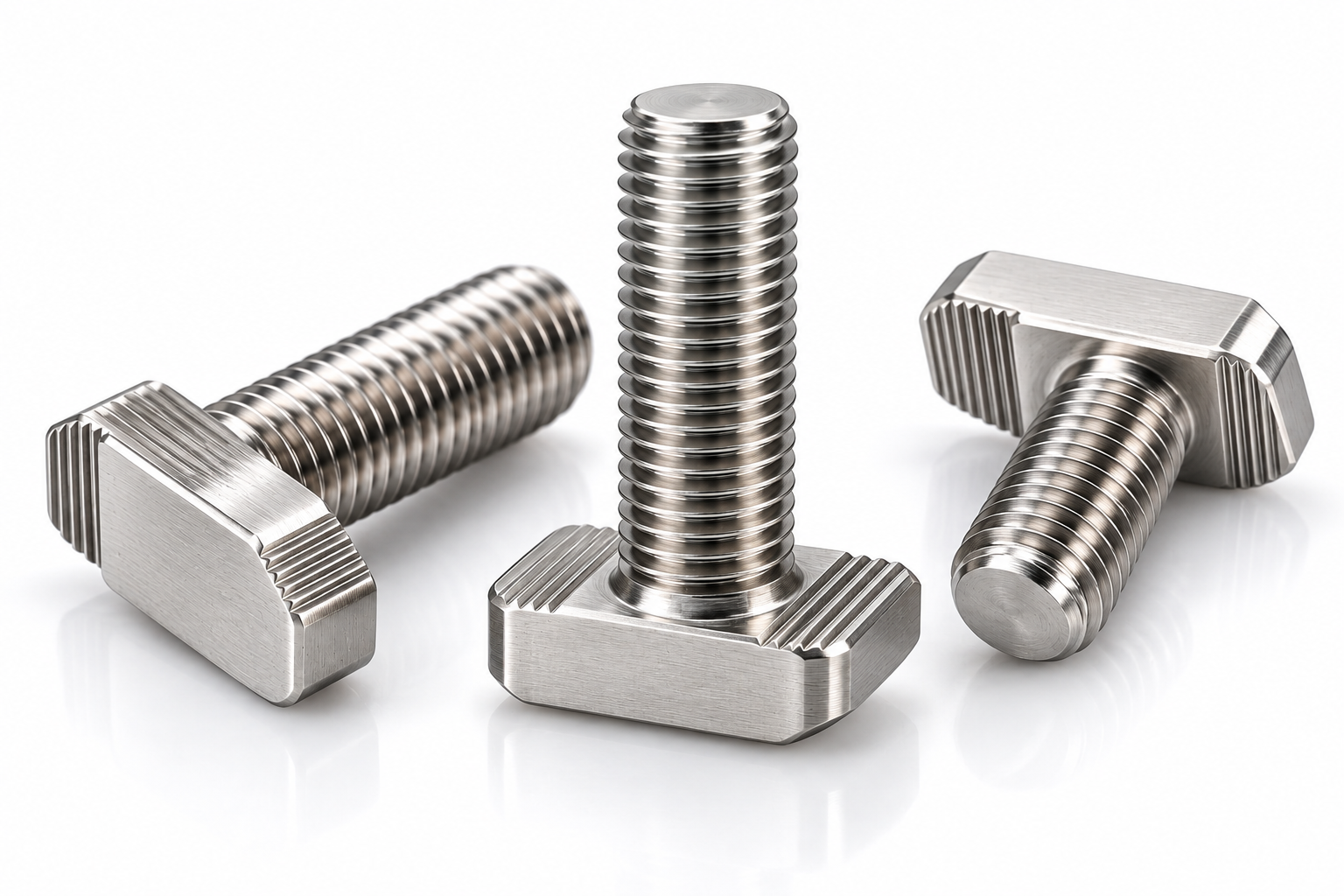
T-bolts and carriage bolts slide in the channel of aluminium mounting rails to accept mid-clamps and end-clamps that retain the module frame. A smooth, dome-free underhead profile is important to avoid damage to the rail channel; correct bolt grade maintains clamping force without over-stressing the module frame.
Electrical Enclosure and Inverter Cabinet Fixing
Inverter housings, combiner boxes, and junction enclosures are fixed to mounting brackets using smaller machine screws, socket head cap screws, or self-tapping screws. SS 304 is generally appropriate for these assemblies in sheltered or standard outdoor environments, subject to the installer's specification.
Cable Management and Pipe Clamp Support
DC and AC cable runs are supported along racking structures using U-bolts and pipe clamps. Stainless steel U-bolts resist the weathering that affects carbon steel clamps, reducing maintenance intervention over the plant life. Size selection should match the conduit or cable tray outside diameter.
Selection
Selection considerations
Environment and Corrosion Zone
Inland, low-pollution sites are generally suited to SS 304 or hot-dip galvanised fasteners. Coastal sites within a few kilometres of the sea, or sites with industrial air pollution, warrant SS 316 for its molybdenum-enhanced chloride resistance. Confirm the site's corrosion category with the structural engineer before specifying.
Galvanic Compatibility with Aluminium Rail
Stainless steel is cathodic relative to aluminium; direct contact can accelerate galvanic corrosion of the aluminium rail in the presence of an electrolyte. Industry practice commonly calls for insulating washers or coatings at the interface; discuss isolation requirements with your structural designer when using SS fasteners on aluminium extrusions.
Vibration and Loosening Resistance
Wind and tracker-induced vibration can progressively loosen bolted joints. Prevailing-torque nuts such as DIN 982 or DIN 985 Nylock Nuts, or spring washers used alongside plain washers, are commonly specified to maintain preload. Confirm locking method with the racking manufacturer's assembly instructions.
Thread Form and Size Compatibility
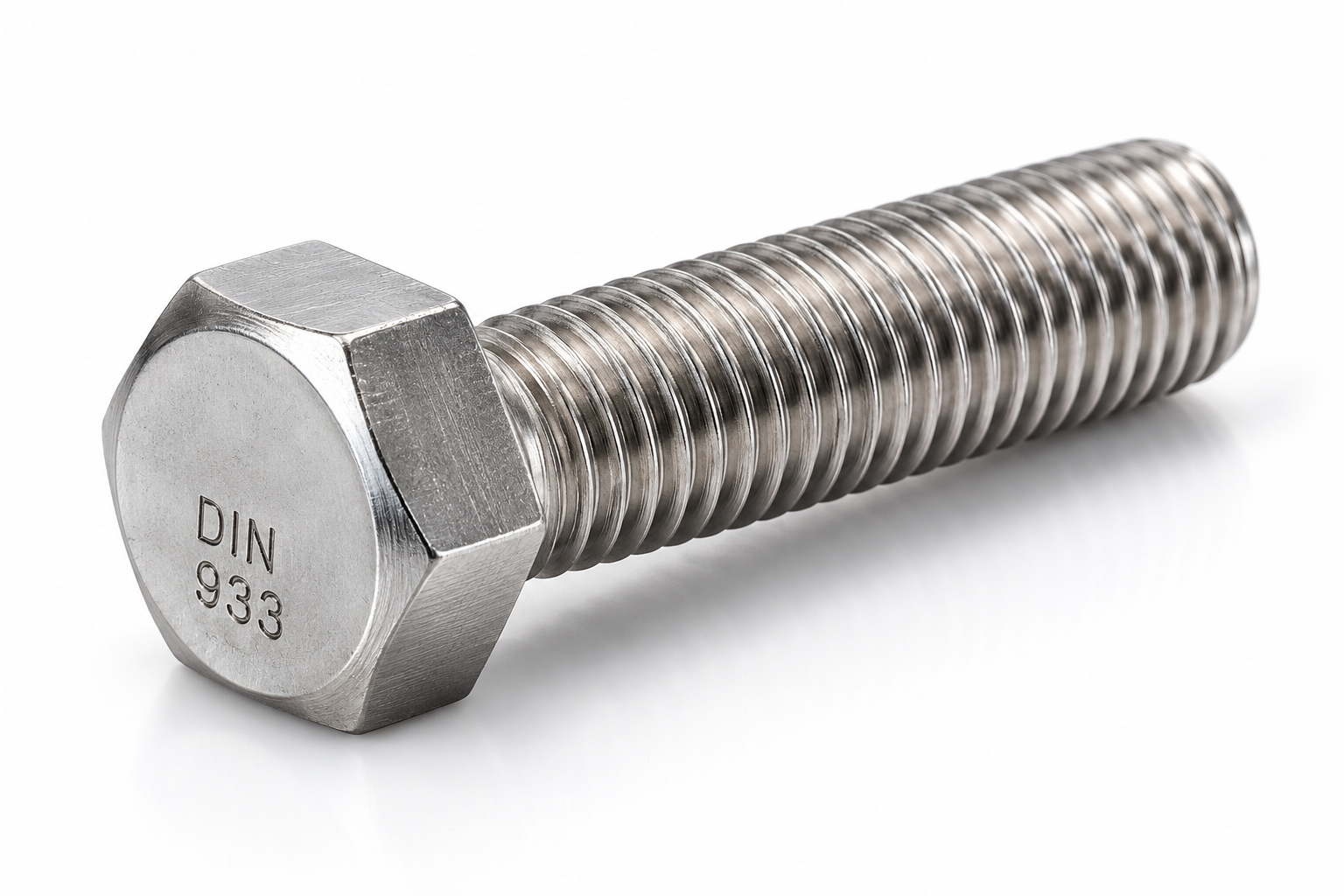
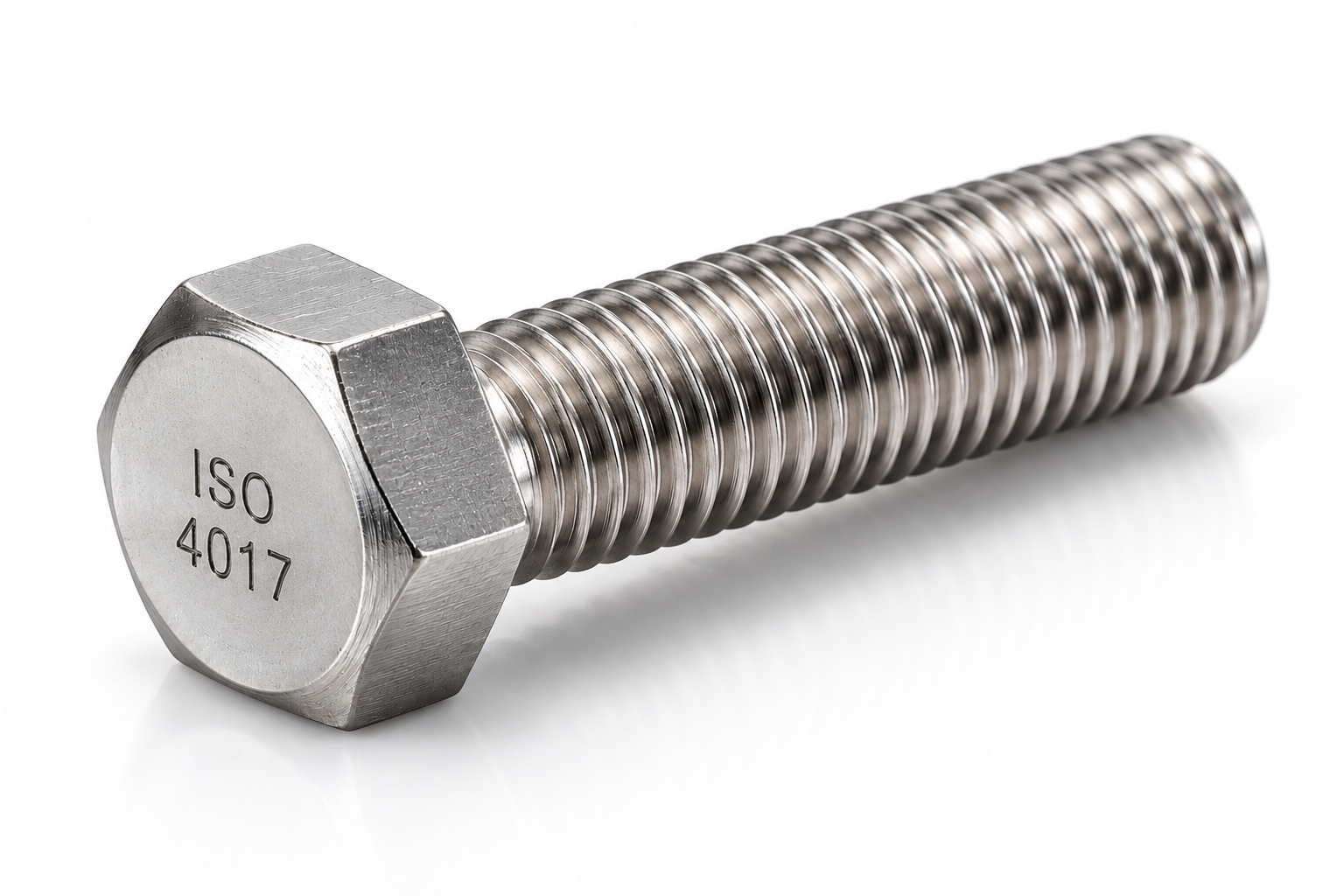
Most racking hardware uses metric coarse threads to DIN or ISO standards. Confirm whether the racking system specifies DIN 933 full-thread hex bolts or ISO 4017, and verify that nut grades are matched. Mixing thread standards or grades can produce incorrect torque–tension relationships and potential joint failure.
Washer Bearing Surface and Load Distribution
Plain washers distribute clamping load over a larger area and protect the rail surface from bolt-head damage. DIN 125 Plain Washers in SS 304 or SS 316 are appropriate for most solar rail interfaces. Star or spring washers add locking function; select the form and size specified in the racking design documentation.
Materials & Environment
Material and environmental considerations
SS 304 (approximately equivalent to ISO 3506 grade A2) offers good general corrosion resistance and is widely used in solar mounting structures in inland and urban environments with moderate humidity. SS 316 (approximately A4, with 2–3% molybdenum) provides superior resistance to chloride-induced pitting and is generally preferred for coastal installations, humid tropical climates, or anywhere salt-laden air or industrial pollutants are present. SS 202 is a lower-nickel austenitic grade that may be considered for sheltered, mild-environment components where cost is a priority, but its corrosion performance in outdoor, high-humidity, or chloride-influenced environments is lower than SS 304 and should be evaluated carefully.
Stainless steel fasteners used against aluminium framing create a dissimilar-metal couple; galvanic corrosion of the aluminium is possible when moisture acts as an electrolyte. Appropriate isolation—using non-conductive washers, sleeves, or coatings—is a general engineering precaution and should be addressed in the structural design. Galling between mating stainless threads can occur during assembly; applying an appropriate anti-galling lubricant or paste and controlling installation torque reduces the risk. These notes are provided as general engineering guidance; site-specific conditions should be assessed by a qualified engineer.
General guidance only. Confirm grade and design for your environment.
FAQs
Frequently asked questions
Does Accurate Fastners supply fasteners specifically for solar racking and mounting structures?
Yes. Solar energy is a documented industry in the Accurate Fastners brochure. We supply stainless steel fasteners for panel mounting structures, rooftop installations, ground-mounted arrays, and tracking systems. Contact us with your project specification for product and grade recommendations.
Should I use SS 304 or SS 316 for a coastal solar project?
As general engineering guidance, SS 316 is preferred over SS 304 in chloride-rich environments such as coastal sites, due to its molybdenum content, which improves resistance to pitting corrosion. Final grade selection should be confirmed by a qualified engineer based on site-specific corrosion category and exposure assessment.
Can stainless steel bolts be used directly against aluminium mounting rails?
Stainless steel is cathodic relative to aluminium, creating a galvanic couple that may accelerate corrosion of the aluminium in the presence of moisture. General practice involves isolating the metals using non-conductive washers, sleeves, or coatings. Confirm the isolation method with the racking system designer.
What sizes of hex bolts and threaded rod are available for solar structure applications?
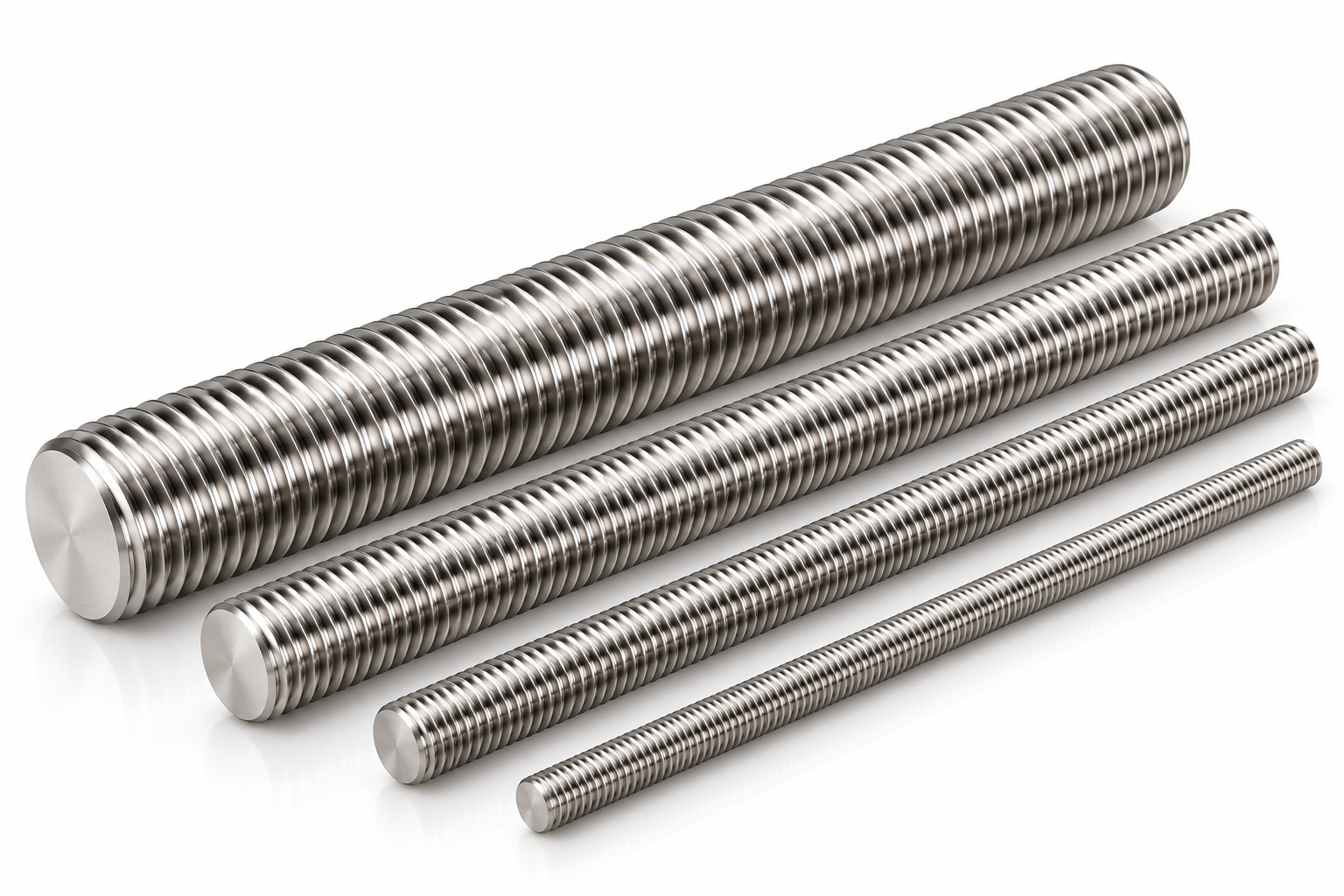
DIN 933 Hex Bolts are available in SS 304, SS 316, and SS 202 from M3 to M24. DIN 976 Threaded Rod is available in SS 304 and SS 316 from M6 to M24 and BSW/UNC ¼" to 1". Other bolt series and sizes are listed in the catalogue; contact us for availability confirmation.
How can I request a quotation or discuss a solar project requirement?
Submit your enquiry through the website's enquiry form, or contact the export team directly at export@accuratefastners.com or via WhatsApp. Please include your product specifications, grade requirements, quantities, and delivery location to receive an accurate and timely quotation from our team in Ahmedabad, India.
Related Products
Products often considered for solar energy
Request a Quote
Fasteners for solar energy – request a quote
Share the product, standard, material grade, sizes and quantities you need. Our team will review your requirement and respond with availability and a quotation.