
DIN 912304 · 316 · 202
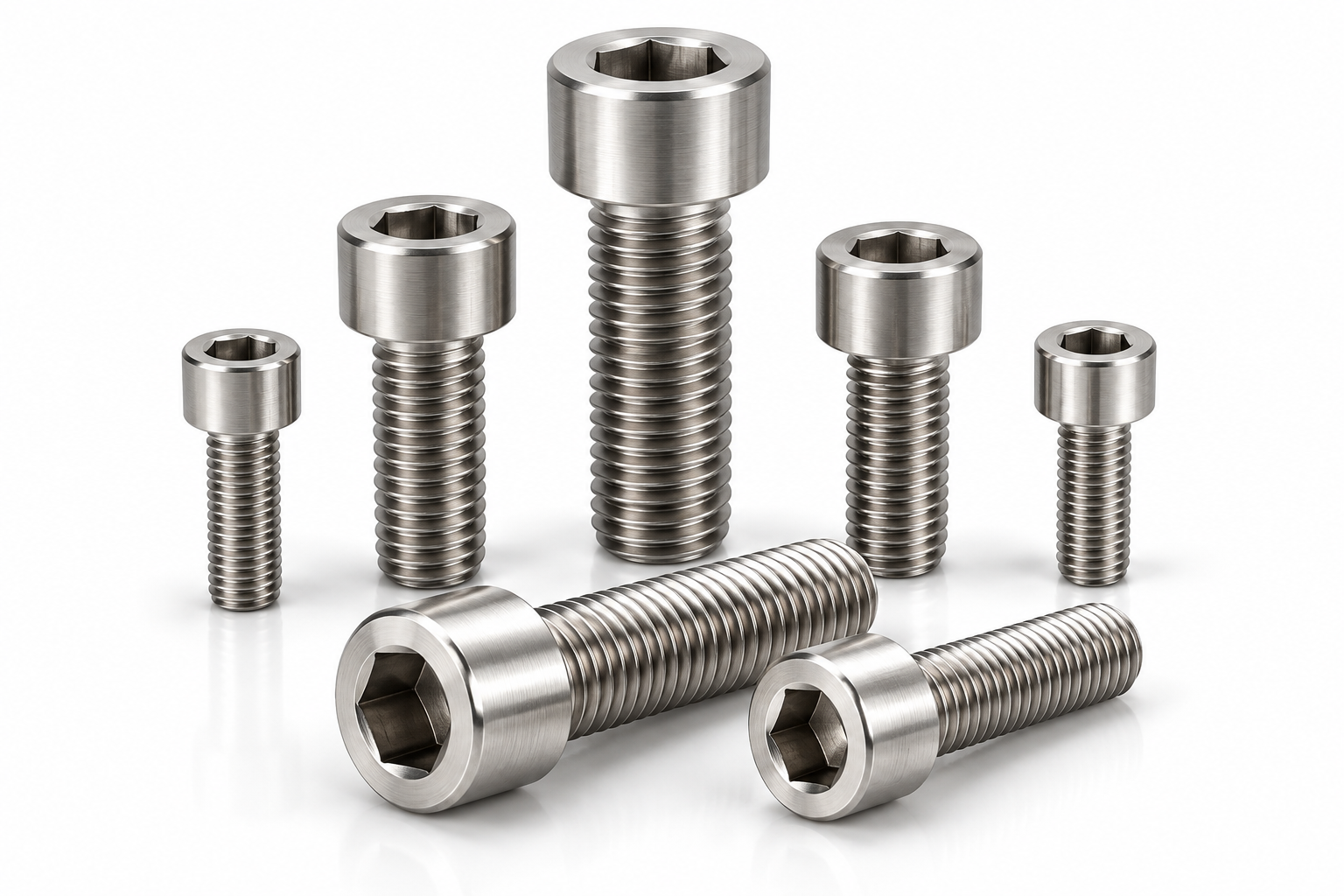
Stainless Steel Socket Head Cap Screw (DIN 912)
Size: M3 – M16
View Product Enquire
Product Guide
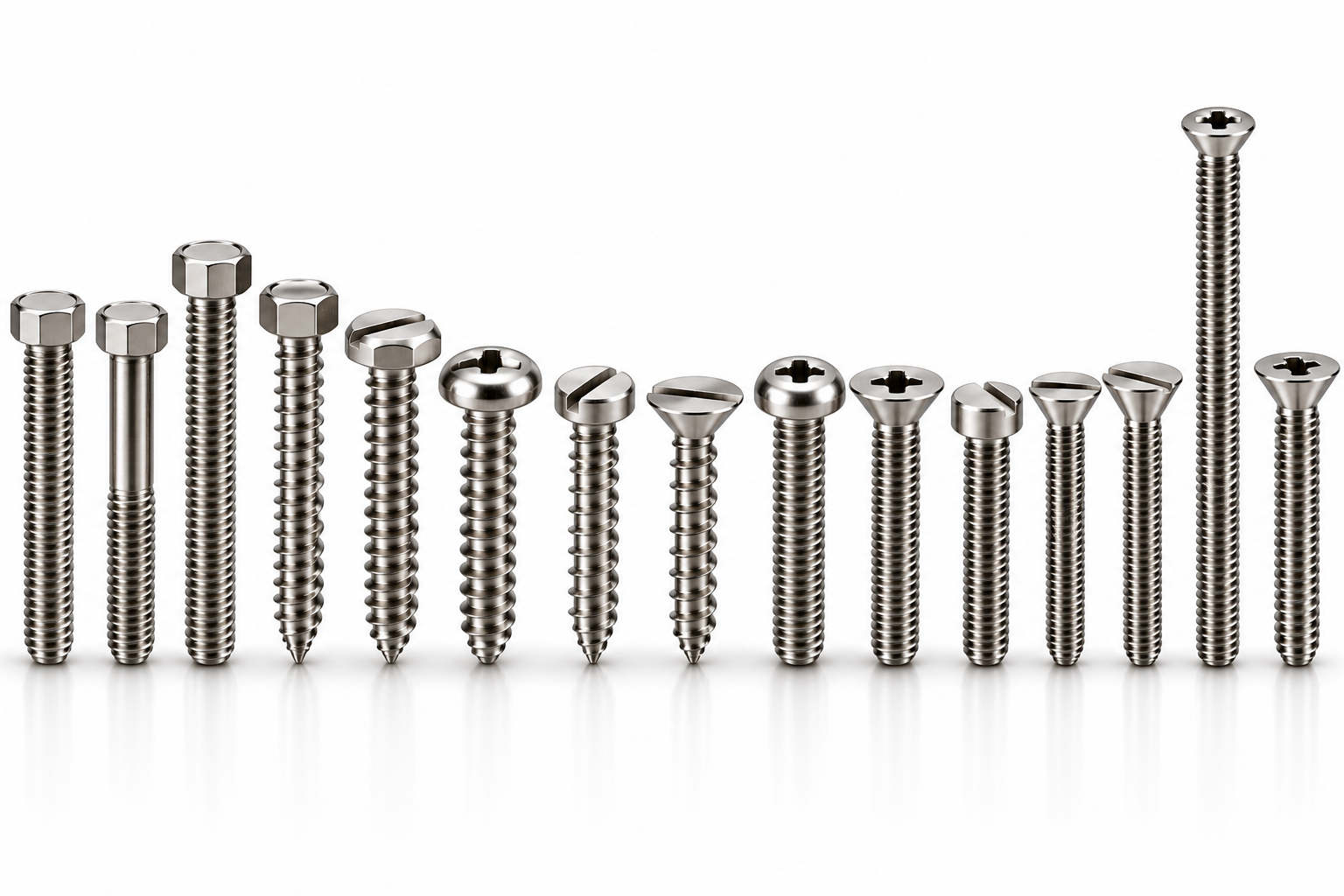
Selecting the correct stainless steel screw requires understanding your drive type, head style, thread requirements and operating environment. Accurate Fastners supplies individual stainless steel screws in socket head cap, countersunk, pan head, cheese head and self-tapping variants, with SS 202, SS 304 and SS 316 grades available across the range.
Each screw type serves a specific purpose: socket head cap screws for high-torque applications, countersunk screws for flush finishes, self-tapping screws for sheet metal, and machine screws for tapped holes and nuts. Choose the appropriate standard — DIN 912, DIN 7991, DIN 7981, DIN 7985, DIN 965, DIN 84 or DIN 963 — based on your assembly requirements.
Size: M3 – M16
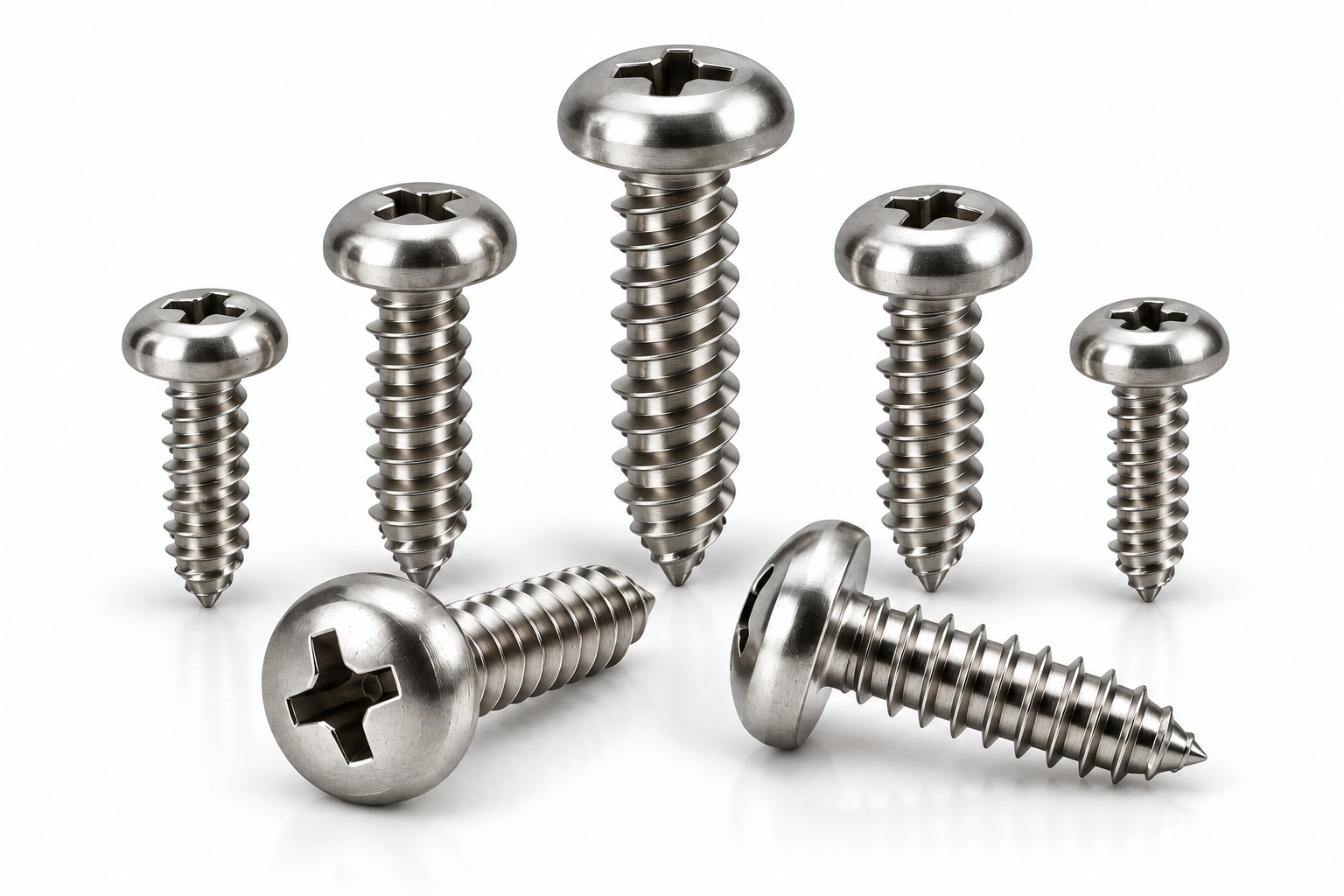
Size: M2.9 – M6.3 (ST sizes)
Socket head cap screws (DIN 912) use an internal hexagon drive, providing high torque transmission in a compact head profile. They are preferred where limited clearance or high bolt preload is required. Machine screws (DIN 7985, DIN 965) use external drives — Phillips or slotted — and are commonly used in sheet metal, plastics and wood with tapped holes or nuts.
Self-tapping screws (DIN 7981, DIN 7982) form their own thread in sheet metal and plastics, eliminating the need for pre-tapping. They are ideal for thin materials where tapping is impractical. Machine screws require pre-tapped holes or nuts and provide more precise thread engagement for permanent assemblies.
Countersunk heads (DIN 7991, DIN 965) sit flush with the surface, providing a clean finish and preventing protrusion. They are common in visible assemblies and where a smooth surface is required. Pan heads (DIN 7985) provide a bearing surface and are preferred when head visibility is acceptable or when a larger contact area is beneficial.
Allen (hexagon socket) drives resist cam-out and transmit high torque, requiring a hex key or socket driver. They are common in precision machinery and automotive applications. Phillips drives provide good screwdriver compatibility and are widely used in electronics, appliances and general assembly where tool availability is a consideration.
Request a Quote
Share the product, standard, material grade, sizes and quantities you need. Our team will review your requirement and respond with availability and a quotation.